Listen to this article
How to Study from Lecture Recordings
Learning how to study from lecture recordings can turn passive rewatching into focused, high-value revision. Instead of replaying entire classes from start to finish, students get better results by setting a goal for each session, using timestamps, pausing to summarize ideas, and converting lecture points into questions, flashcards, and practice prompts. Whether you want to study from recorded lectures after missing class, clarify difficult topics, or revise from lectures before an exam, the key is to engage actively with the material so recordings become a tool for understanding, memory, and faster review rather than a time-consuming backup.
Key takeaways
- Do not rewatch every lecture passively; study from class recordings with a clear purpose such as filling note gaps, reviewing a concept, or preparing for a test.
- Use active methods while watching, including pausing to summarize, writing questions, and creating flashcards from key explanations and examples.
- Speed controls, timestamps, and selective replay help you revise from lectures more efficiently than watching the whole recording at normal speed.
- Turn lecture content into retrieval practice by testing yourself after each segment instead of relying on recognition from repeated listening.
- Combine recorded lectures with slides, textbook sections, and assignment problems so you learn concepts in context and identify what your instructor emphasizes.
Start with a goal before pressing play
The biggest mistake students make when they study from recorded lectures is treating the recording like entertainment rather than a study tool. Before you begin, decide exactly why you are using the lecture. Your goal might be to catch up on missed notes, understand a confusing topic, identify exam-relevant examples, or review a unit. Write that goal at the top of your page. Then skim your syllabus, lecture slides, or notes so you know the structure of the class. This keeps you from getting lost in details. If you are using a full recording, break it into short chunks such as 10 to 20 minutes. For each chunk, note the topic covered and what you need to extract from it. This makes it much easier to use lecture recordings to study efficiently and avoid spending hours rewatching material without retaining it.
Use active note-taking while watching recorded lectures
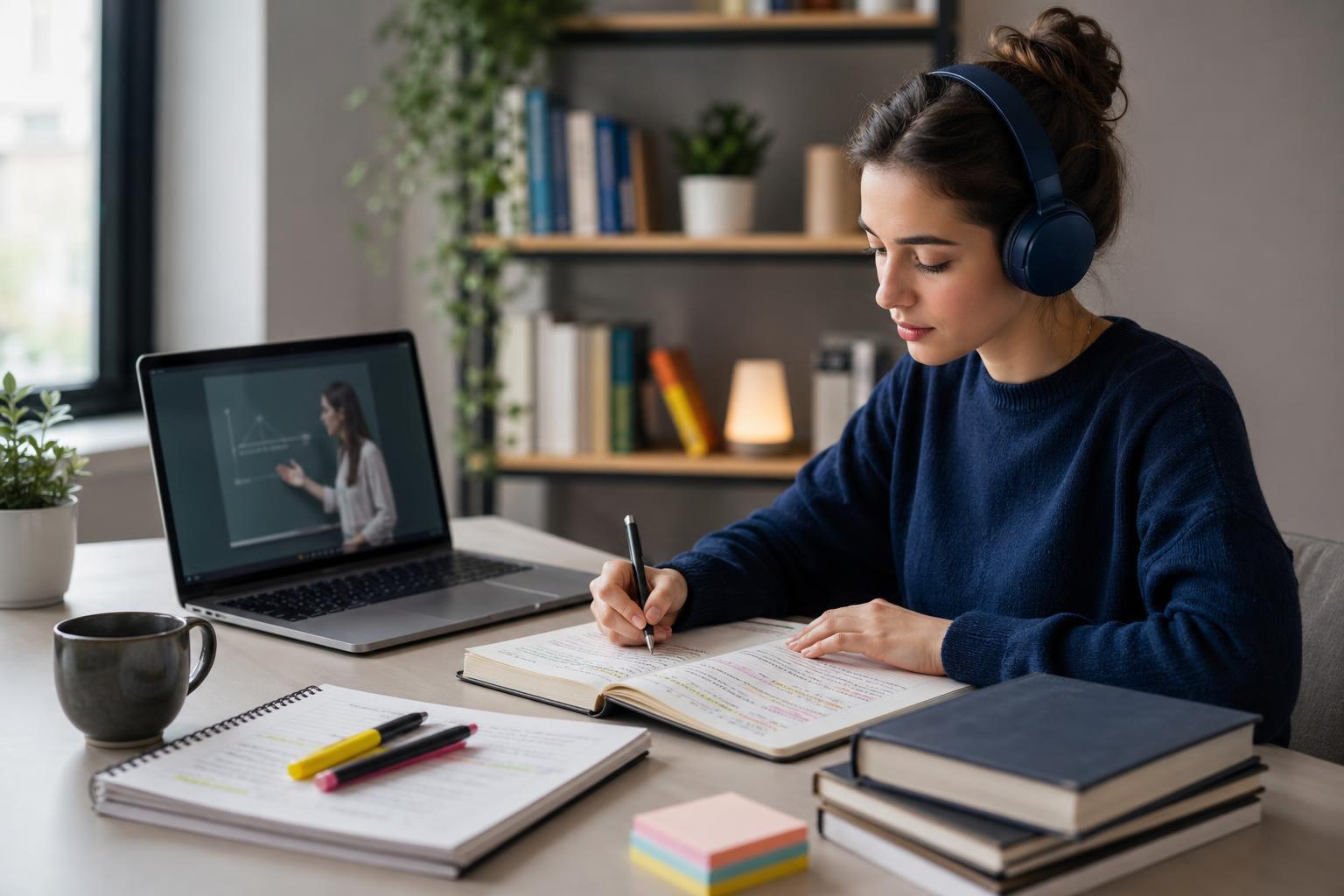
To study from recorded lectures effectively, interact with the content as you watch. Keep your notes simple and focused on main ideas, definitions, processes, formulas, and examples your instructor emphasizes. Pause after important points and write a one- or two-sentence summary in your own words. Mark unclear sections with a question mark so you can revisit them. If the professor works through a problem or gives a case example, stop the recording before the explanation ends and try to predict the next step yourself. This creates desirable difficulty and improves memory. Also note any phrases that signal importance, such as 'this will be on the exam,' 'remember this distinction,' or 'students often confuse these two ideas.' When possible, add timestamps beside major topics so you can return quickly later instead of searching through the whole lecture.
Turn recordings into revision materials
Lecture recordings are most useful when you transform them into study resources. After each study session, convert your notes into active recall prompts. You can make flashcards for key terms, question-and-answer sheets for major concepts, summary tables for comparisons, and step-by-step guides for processes or problem types. If your instructor explains a theory, create a question like 'What are the three assumptions of this model?' If they solve a calculation, write a practice problem with the method hidden on the back. If they compare two ideas, build a chart from memory first and then check your notes. This is a much stronger way to revise from lectures than simply listening again. You can also create a one-page lecture recap with the topic, the top five takeaways, common mistakes, and two possible exam questions based on the lecture.
Use replay strategically instead of rewatching everything
One of the best ways to study from class recordings is to replay only what gives the highest value. Adjust playback speed depending on the task: use faster speed when reviewing familiar content and normal speed for dense explanations or worked examples. Skip long administrative sections, repeated announcements, or class pauses. Replay only unclear parts, important examples, and exam-relevant explanations. A useful method is the three-pass approach: first, scan the lecture quickly to identify important sections; second, watch those sections carefully and take notes; third, test yourself without the recording. If you missed a lecture, avoid trying to produce perfect notes from every sentence. Focus on the learning objectives, main arguments, examples, and anything linked to assignments or assessments. Strategic replay saves time and builds better retention than complete rewatching.
Review after watching to lock in memory
The period after watching is when learning becomes durable. Close the recording and try to recall the lecture from memory. Write down the main concepts, the examples used, and any steps in a process or problem-solving method. Then check your notes to find what you missed. This retrieval step is essential because it reveals whether you actually understood the material. Within 24 hours, revisit the lecture summary briefly and quiz yourself again. A few days later, mix those questions with content from other lectures so you can discriminate between related ideas. If you are preparing for an exam, prioritize recordings connected to difficult topics, instructor emphasis, and past mistakes from homework or quizzes. Studying from recorded lectures works best when each session ends with self-testing, not just finished notes.
Flashcards
What should you decide before starting a lecture recording study session?
A specific goal, such as filling note gaps, understanding a concept, or preparing for an exam.
Why is passive rewatching of lectures ineffective?
Because it creates familiarity without strong retention or the ability to recall information independently.
What is a useful action to take after an important explanation in a recording?
Pause and summarize the idea in your own words.
How can timestamps help when studying from recorded lectures?
They let you return quickly to key topics without searching through the entire lecture.
What should you do with worked examples in a lecture?
Pause before the solution is finished and try to predict or complete the next step yourself.
What is the purpose of converting lecture notes into flashcards or questions?
To turn passive notes into active recall practice that improves memory.
How should playback speed be used strategically?
Use faster speed for familiar review and slower or normal speed for difficult concepts and examples.
What is the best thing to do immediately after finishing a lecture recording?
Close the recording and test yourself on the main ideas from memory.
Quiz
1. What is the most effective first step when deciding how to study from lecture recordings?
- A. Watch the whole lecture at normal speed without stopping
- B. Set a clear study goal before pressing play
- C. Copy every word the instructor says
- D. Wait until exam week to review recordings
Show answer
Answer: Set a clear study goal before pressing play
A clear goal helps you focus on what to extract from the lecture, such as difficult concepts, missing notes, or exam-relevant examples.
2. Which method best helps students study from recorded lectures actively?
- A. Listening while doing unrelated tasks
- B. Rewatching lectures repeatedly without notes
- C. Pausing to summarize and ask questions
- D. Keeping the recording on in the background while scrolling
Show answer
Answer: Pausing to summarize and ask questions
Active engagement through summarizing and questioning improves understanding and retention more than passive listening.
3. How should you use lecture recordings when revising before an exam?
- A. Replay every lecture from beginning to end
- B. Focus on difficult topics, instructor emphasis, and worked examples
- C. Only listen to the first ten minutes of each recording
- D. Avoid testing yourself until all lectures are rewatched
Show answer
Answer: Focus on difficult topics, instructor emphasis, and worked examples
Selective review targets the material most likely to improve performance and saves time compared with full rewatching.
4. What is the main benefit of turning lecture notes into flashcards?
- A. It makes your notes look more organized
- B. It replaces the need to attend class
- C. It creates active recall practice
- D. It allows you to avoid understanding the topic
Show answer
Answer: It creates active recall practice
Flashcards help you retrieve information from memory, which is more effective for learning than simply rereading notes.
5. What should you do after finishing a section of a recorded lecture?
- A. Move on immediately without checking understanding
- B. Restart the lecture from the beginning
- C. Test yourself on the main ideas from memory
- D. Delete your notes to save time
Show answer
Answer: Test yourself on the main ideas from memory
Retrieval practice after watching helps lock in learning and reveals what you still need to review.
FAQs
Is it better to watch an entire lecture recording in one sitting?
Usually not. Most students learn better by breaking a lecture into smaller chunks, especially if the recording is long or content-heavy. Short focused blocks make it easier to pause, summarize, and test yourself without losing attention.
How do I study from recorded lectures if I missed class completely?
Start with the lecture slides or syllabus to understand the structure, then watch the recording with the goal of identifying main ideas, definitions, examples, and assignment links. Avoid trying to transcribe everything. Build usable notes and then test yourself on the core concepts.
Should I take detailed notes from lecture recordings or just listen?
Take selective notes, not a transcript. Focus on major concepts, explanations, examples, formulas, and anything the instructor emphasizes as important. Then convert those notes into questions, flashcards, or practice prompts for revision.
Study smarter with AI
Turn lecture recordings into summaries, flashcards, quizzes, and review questions faster with Study Assistant. Use it to organize key points from recorded lectures and build an active revision plan.
Related guides
- How to summarize a long lecture fast
- How to study for an exam from one lecture
- How to catch up after missing a lecture
- How to organize lecture notes for finals
- How to revise from transcripts
- Best way to study with recorded lectures
- How to make flashcards from class notes
- How to make quiz questions from notes

Leave a Reply